01
Reports written for clinicians
Lab PDFs use reference ranges, abbreviations, and units that are normal in clinical settings but rarely explained to patients. Many "abnormal" values are clinically uninteresting in context.
Health literacy
Most of your information already exists — scattered across PDFs, apps, and notes from past appointments. Ingrid puts it in one place and explains the terms in plain language.
Free to join. GDPR-compliant. Data stored in the EU.
Ingrid
Yes — upload them and Ingrid shows each value with its date, unit, and the reference range printed by your lab. Terms you do not know get a plain-language explanation, and what the values mean for you is a question for your doctor — I can help you write it down.
First action
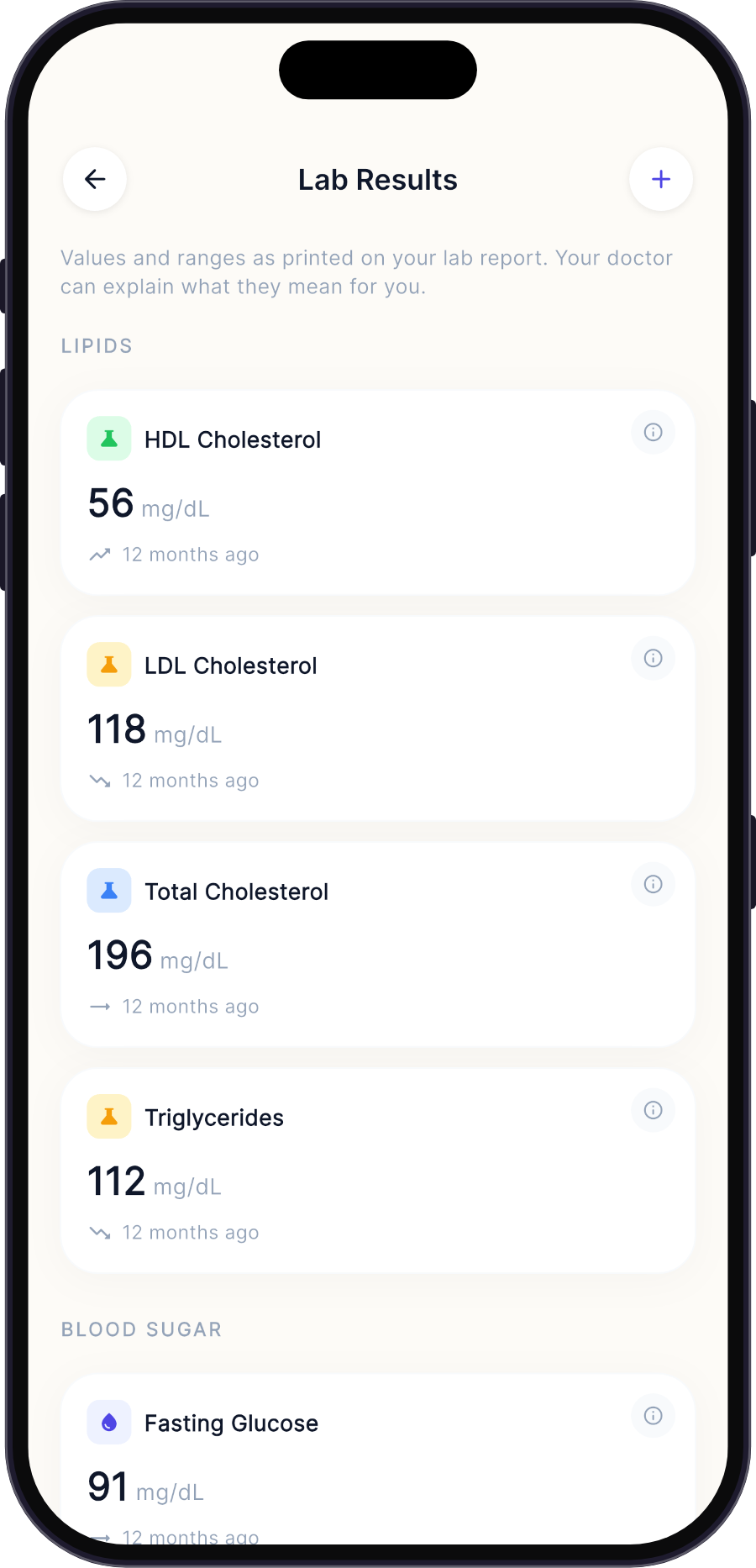
Upload your latest lab report first
Ingrid shows your values as printed on the report, with your lab’s reference ranges, and keeps them in one timeline.
Illustrative example only. Ingrid shows your values as recorded and explains terms; what they mean for you is for your doctor to explain.
Why this is hard
The data exists. It is just written for someone else and stored in five places.
Lab PDFs use reference ranges, abbreviations, and units that are normal in clinical settings but rarely explained to patients. Many "abnormal" values are clinically uninteresting in context.
Steps in one app, sleep in another, weight somewhere else, labs in an email, family history in your head. Without a single view, patterns are easy to miss.
A typical GP appointment is around ten minutes. Even a great clinician cannot connect every dot in that window — and you cannot expect to remember everything afterward.
A value at the edge of "normal" can be entirely fine or genuinely worth attention depending on your trend, age, medications, and other values. Ranges alone do not capture this.
Clinicians treat what is wrong today. Almost no one is paid to track the decade-long trends — the slow creep of glucose, the gradual loss of HDL — that quietly become tomorrow’s diagnosis.
“Know your numbers.”
There are crucial numbers you should know about your health and you can’t know them without measuring them: body mass index (BMI), blood pressure, blood sugar and cholesterol. If they’re high, make a plan with your doctor for how to address them.
— Dr. Donald Lloyd-Jones Preventive cardiologist at Boston University
Quoted from The New York Times. Dr. Donald Lloyd-Jones is not affiliated with Ingrid, and the quote does not imply an endorsement of Ingrid.
How it works
Three steps to turn disconnected records into something usable.
Start by pulling your information into one place: lab PDFs, wearable data, family history, and anything worth bringing to your next appointment.
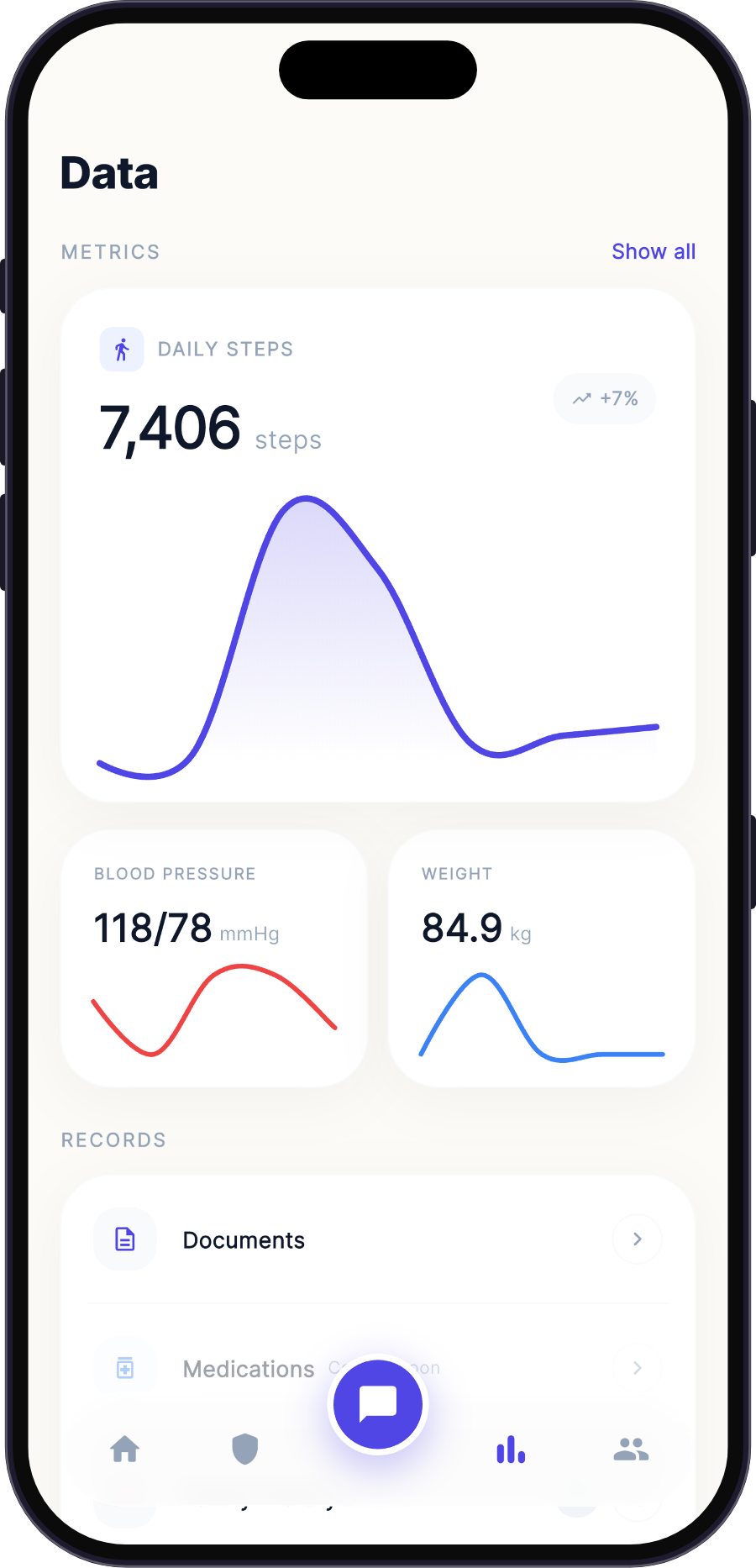
Ingrid explains medical terms and abbreviations in plain language and shows your values over time, exactly as your lab reported them.
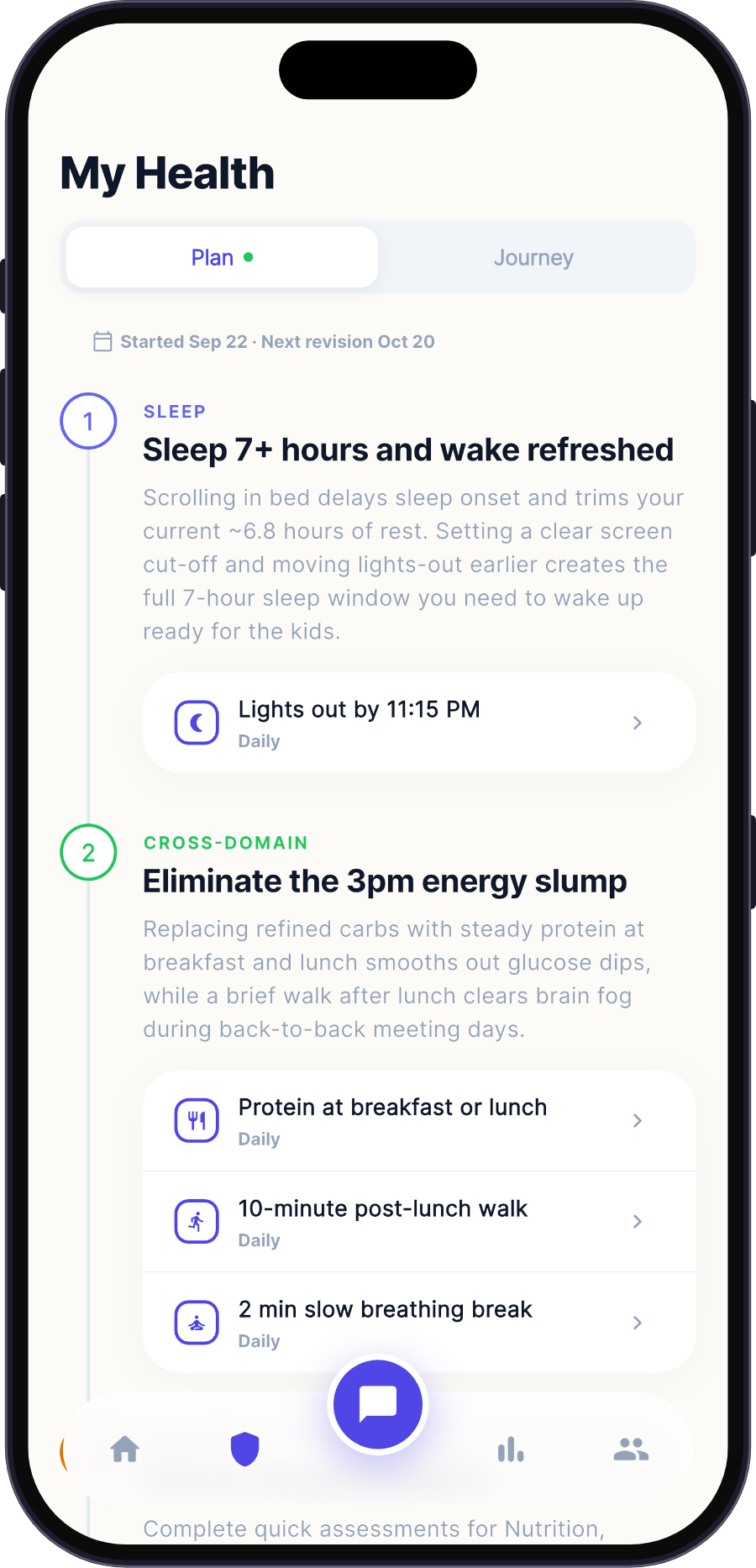
When you see your doctor, Ingrid helps you bring your recorded information and your own questions in one place.
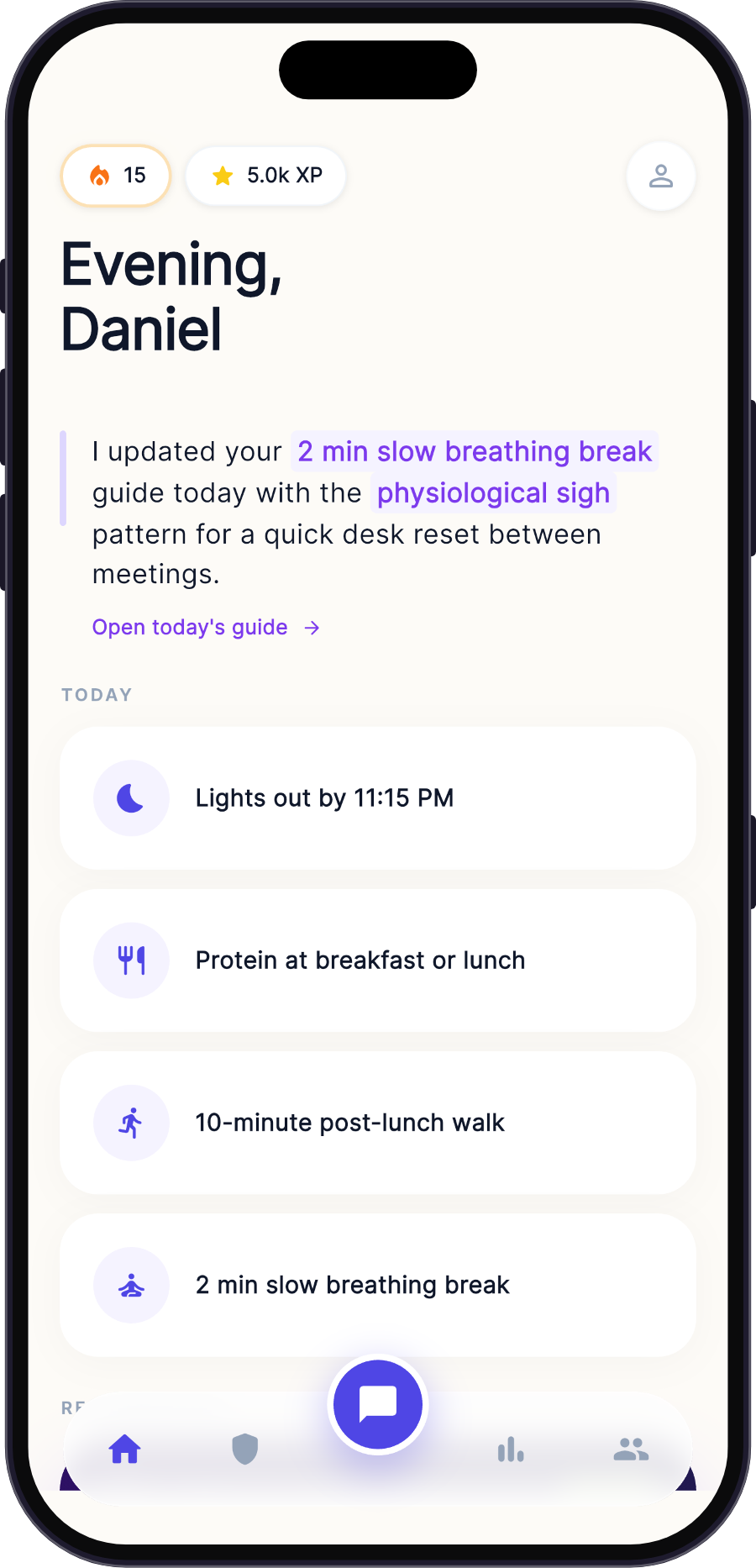
Free to join the waitlist. We will contact you when the next beta slots open.
We use your email only to contact you about the Ingrid beta. You can ask us to delete it at any time. Privacy policy
Why Ingrid
Patient portals store documents. Ingrid keeps them together with your everyday data and explains the terms, so you can prepare better for your appointments.
When to see a doctor
Any new or worsening symptom, any value flagged as out of range that you have not discussed with a GP, or any concerns about hereditary conditions in close relatives. Ingrid is for understanding, not diagnosing.
FAQ
Most apps look at one signal: steps, sleep, or weight. Ingrid keeps wearable data, lab reports, documents, family history, and your self-reported habits together — and builds your plan from your goals, preferences, and everyday routine.
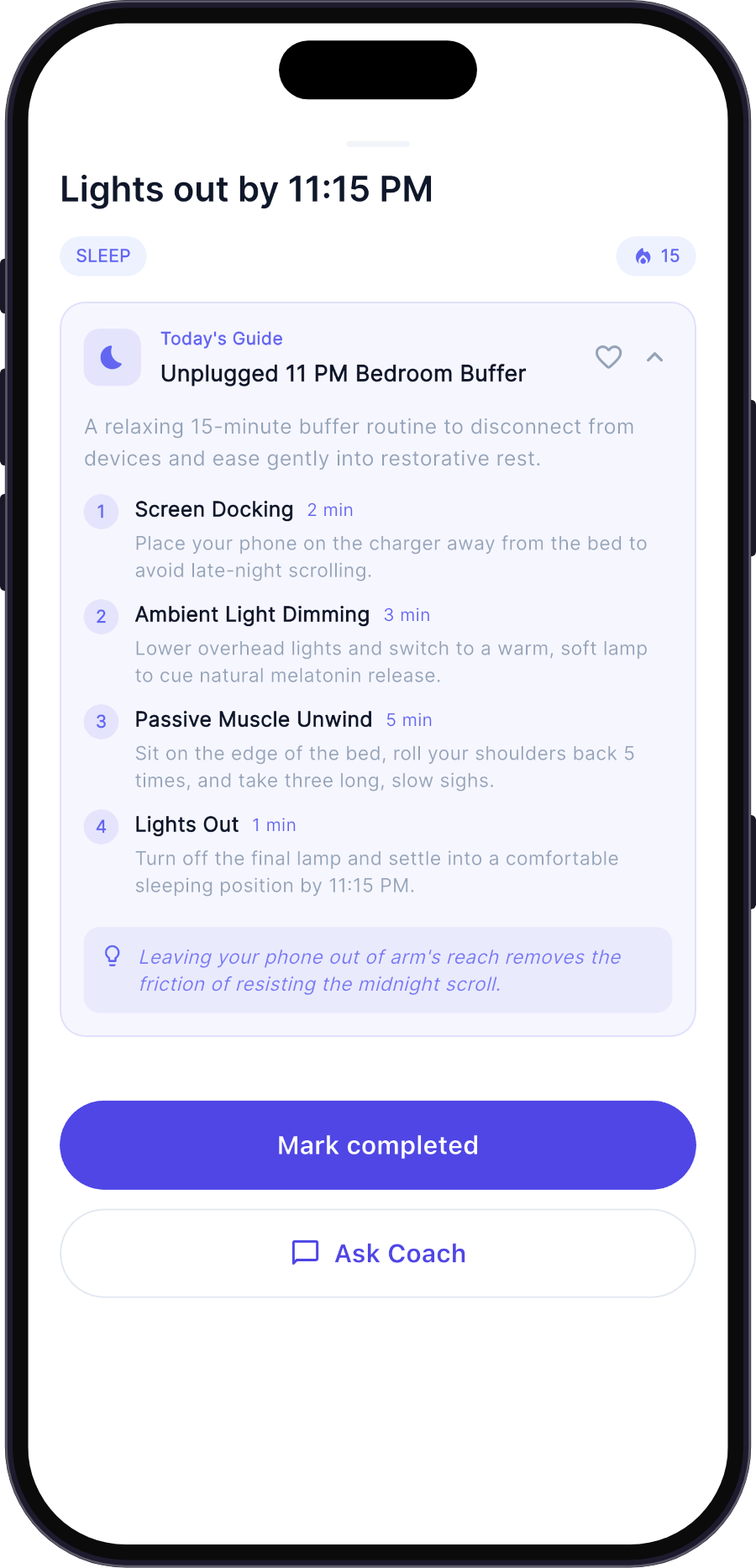
The plan is not written once. At the end of each plan cycle, Ingrid looks at which habits stuck and which did not, and suggests changes you can accept or decline. The plan a month from now will look different from today’s — because it should.
Ingrid is not a replacement for a doctor, and does not pretend to be. It does not diagnose, interpret results, or recommend tests or treatments. For medical questions, Ingrid helps you prepare for your appointment — and if you choose, you can share your data with your own doctor or coach.
Yes. Data is encrypted in transit and at rest, stored in the EU, and handled in line with GDPR. You can export or delete everything at any time.
PDF, JPG, and PNG of lab reports. Ingrid is built to recognise reports from major European and US labs automatically.
It reads the values, units, and reference ranges from your report so you can see them in one timeline, exactly as your lab printed them. It does not interpret them — your doctor can explain what they mean for you.
Yes. You choose exactly which categories each connected doctor or coach can see, and you can change that at any time.
A coach for your everyday habits. Your own doctor for medical questions.
Ready when you are
Start with the goal you care about. Ingrid turns it into small habits that fit your life, then adapts the plan with you over time.
Join the waitlist for early access.
We use your email only to contact you about the Ingrid beta. You can ask us to delete it at any time. Privacy policy