01
Sleep latency above 30 minutes
Consistently taking more than half an hour to fall asleep is associated with stress arousal, caffeine timing, and late screen use. One of the most modifiable factors.
Source·CDC About Sleep (2024)
Sleep quality
Adults need seven to nine hours, but quality matters as much as quantity. Sleep latency, fragmentation, and circadian alignment are the three things most often out of place.
Free to join. GDPR-compliant. Data stored in the EU.
Ingrid
Let us look at your evening routine first. Late caffeine, an irregular bedtime, and a warm bedroom are common habits worth experimenting with — one at a time, not all at once.
First action
Move caffeine earlier for the next three nights
Keep bedtime stable and have your last coffee by early afternoon, then see how your nights feel.
Illustrative example only. Ingrid helps you build sleep habits; it does not assess sleep disorders.
Possible reasons
Sleep medicine looks at a small number of measurable signals. Most issues live in one of these.
Consistently taking more than half an hour to fall asleep is associated with stress arousal, caffeine timing, and late screen use. One of the most modifiable factors.
Source·CDC About Sleep (2024)
Multiple awakenings break the natural sleep cycles your body needs for memory consolidation and physical recovery. Alcohol, late large meals, and a warm bedroom are common contributors.
Source·CDC About Sleep (2024)
Irregular bed and wake times, weekend "social jetlag", late caffeine (after roughly 2pm), and a lack of morning daylight all shift the internal clock and reduce sleep quality even when hours look fine.
Source·CDC About Sleep (2024)
Loud snoring with witnessed breathing pauses, morning headaches, and unrefreshing sleep despite adequate hours warrants a clinical assessment. It is more common than most people realise.
Chronic pain, some medications (beta-blockers, SSRIs, stimulants), and unmanaged anxiety or depression all degrade sleep quality. Identifying them changes which plan is appropriate.
“Sleep consistency refers to how well you maintain the same bedtime and wake-up time from one day to the next.”
Consistency matters because irregular timing can undermine sleep quality even when the total hours look reasonable.
— Jean-Philippe Chaput, Ph.D. Professor of pediatrics at University of Ottawa
Quoted from The New York Times. Jean-Philippe Chaput, Ph.D. is not affiliated with Ingrid, and the quote does not imply an endorsement of Ingrid.
How it works
Three steps to find a sleep habit worth trying first.
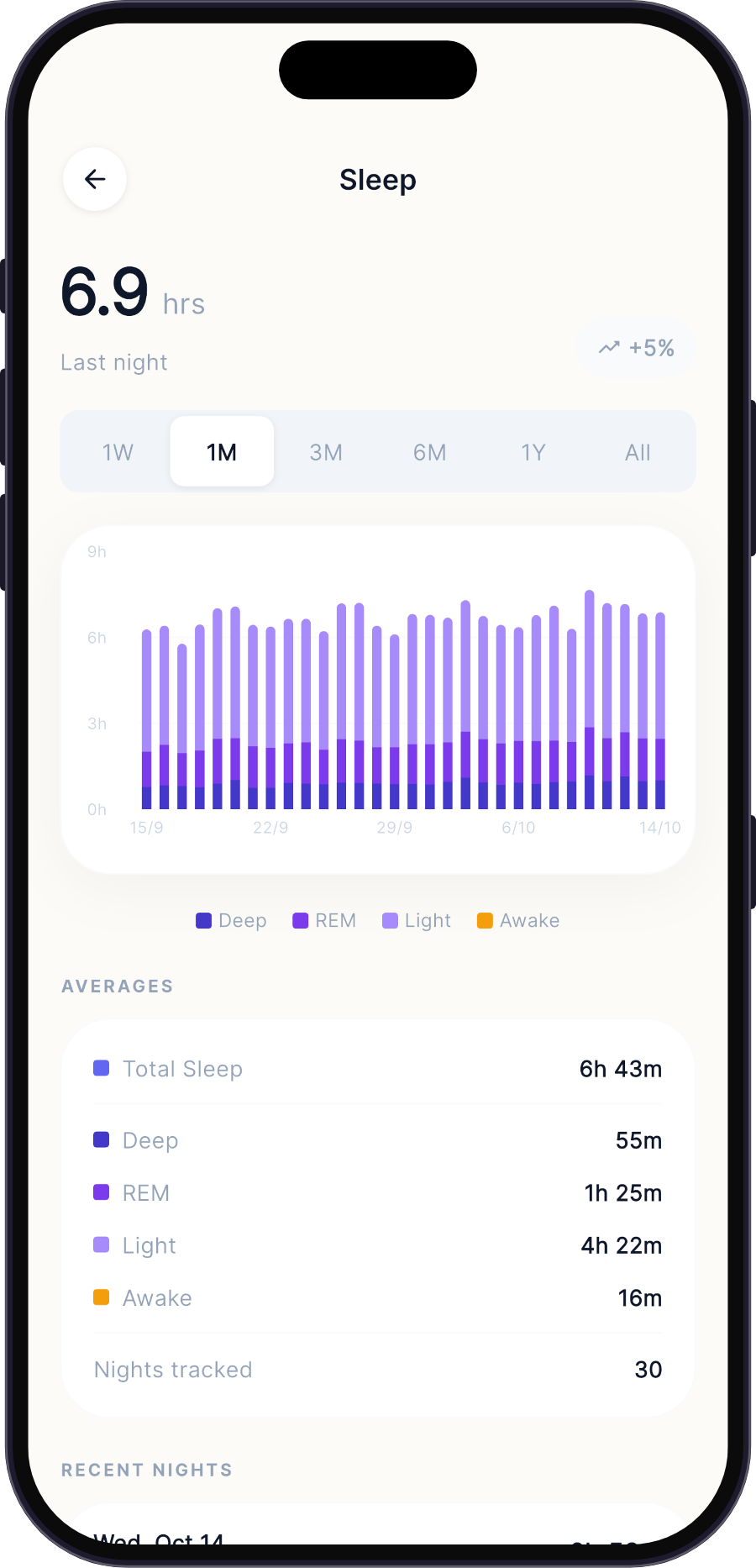
Start with a few nights of real sleep data so you can see your routine behind “I slept eight hours.”
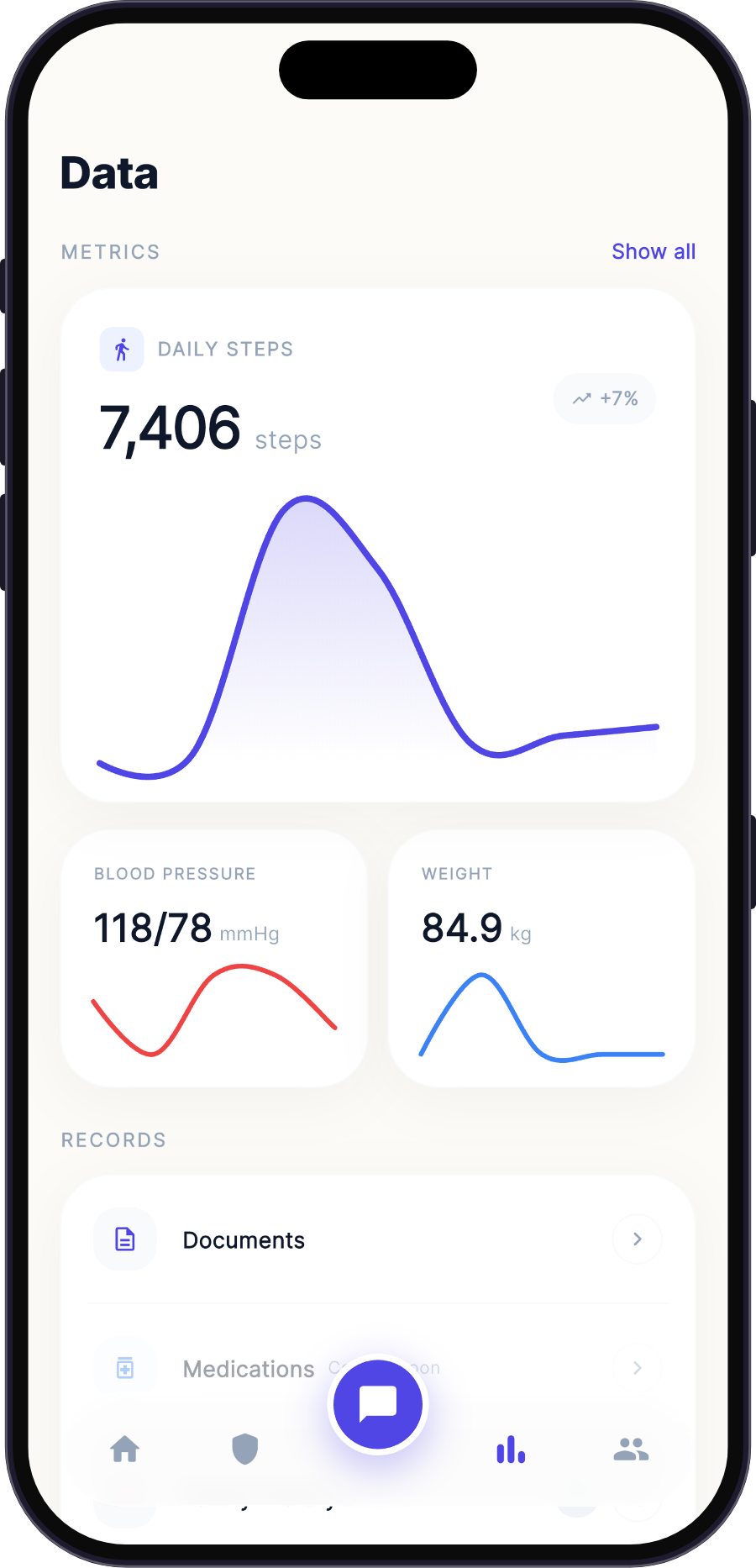
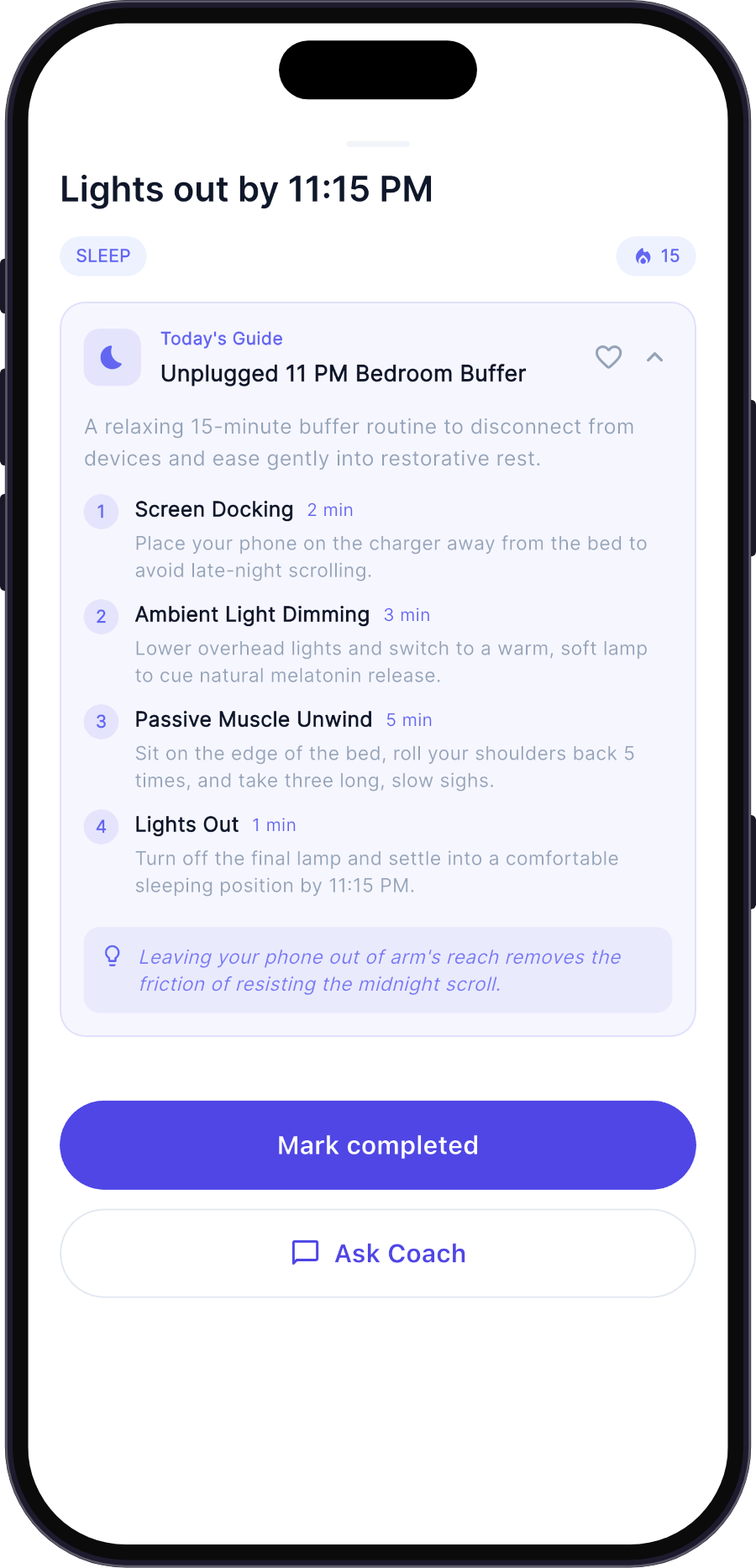
Ingrid looks at your timing, caffeine, and evening routine with you and suggests one habit to try first.
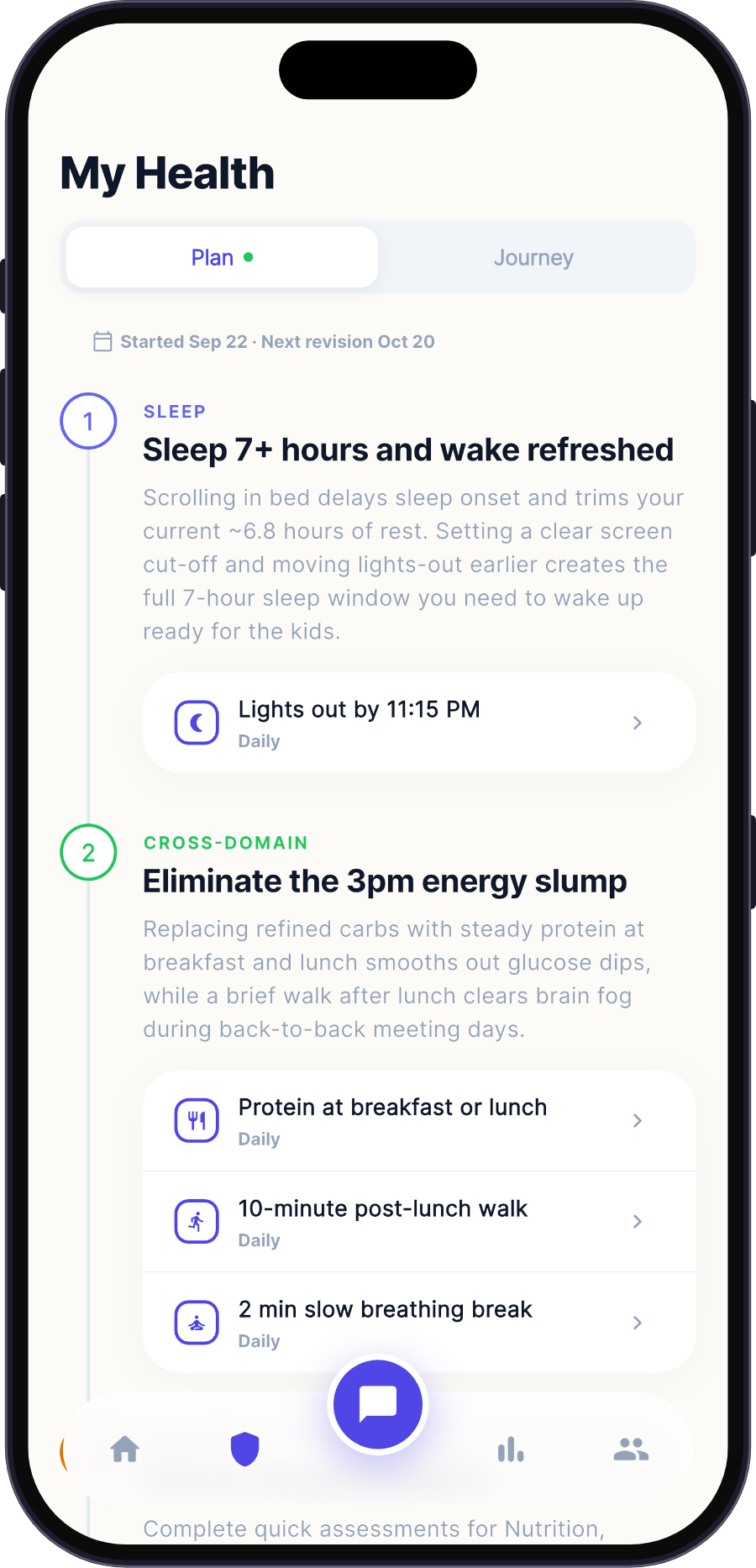
Ingrid helps you test small changes, keep what works, and drop what does not.
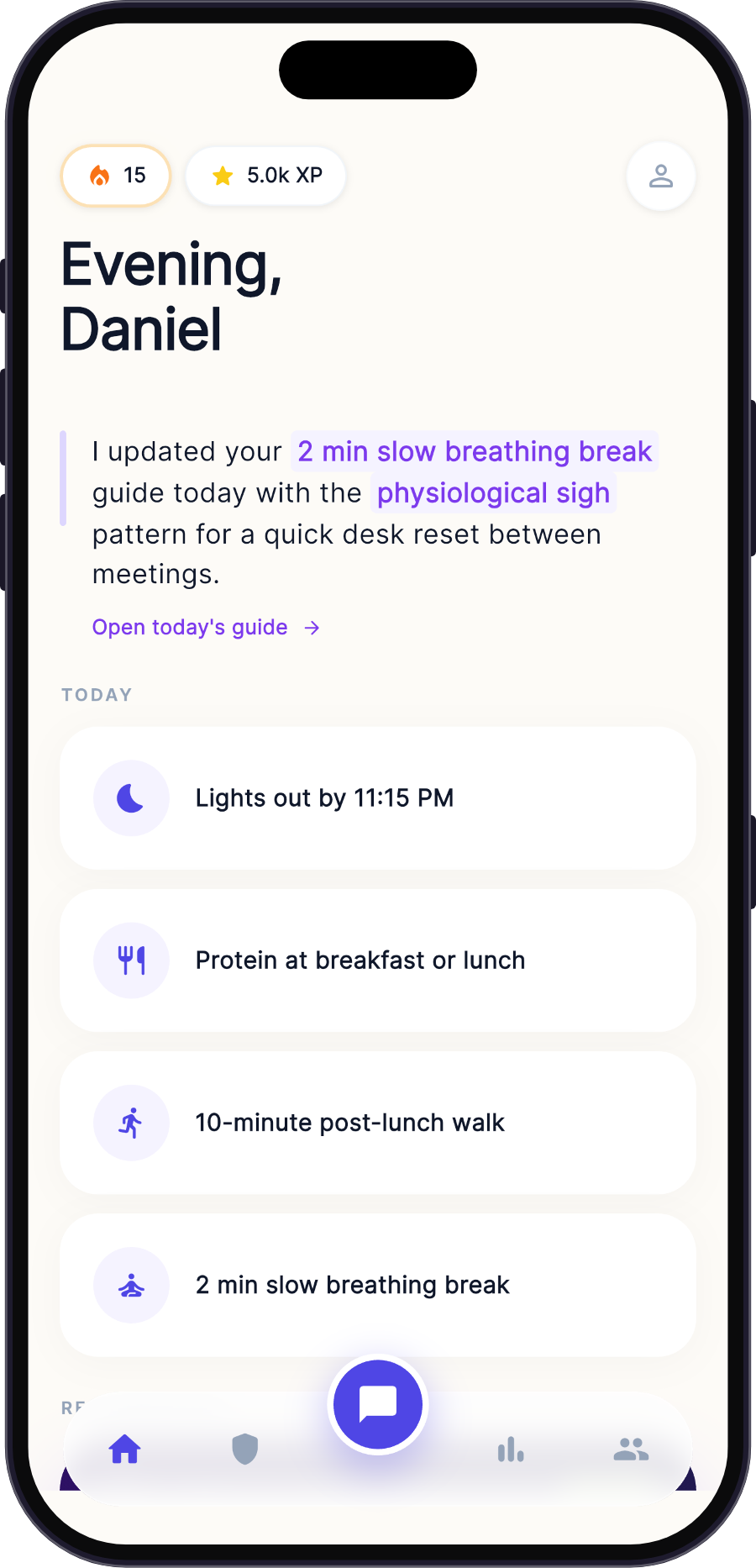
Free to join the waitlist. We will contact you when the next beta slots open.
We use your email only to contact you about the Ingrid beta. You can ask us to delete it at any time. Privacy policy
Why Ingrid
Sleep trackers describe the night. Ingrid helps connect the night to the daytime behaviors that are actually shaping it.
When to see a doctor
Sleep problems that last more than three months, loud snoring with breathing pauses, or daytime sleepiness that affects your safety (for example while driving) should be checked by a doctor. Ingrid supports sleep habits and does not assess sleep disorders.
FAQ
Most apps look at one signal: steps, sleep, or weight. Ingrid keeps wearable data, lab reports, documents, family history, and your self-reported habits together — and builds your plan from your goals, preferences, and everyday routine.
The plan is not written once. At the end of each plan cycle, Ingrid looks at which habits stuck and which did not, and suggests changes you can accept or decline. The plan a month from now will look different from today’s — because it should.
Ingrid is not a replacement for a doctor, and does not pretend to be. It does not diagnose, interpret results, or recommend tests or treatments. For medical questions, Ingrid helps you prepare for your appointment — and if you choose, you can share your data with your own doctor or coach.
Helpful but not required. A short manual log each morning is enough to build a useful plan.
No. The plan is built around your real life. Regular timing and evening habits often matter more than an earlier bedtime.
Ingrid does not assess or treat sleep disorders. If sleep problems last more than three months, talk to your doctor.
No. Ingrid gives no advice on medicines — that is for your doctor or pharmacist. Ingrid focuses on everyday habits and your sleep environment.
A coach for your everyday habits. Your own doctor for medical questions.
Ready when you are
Start with the goal you care about. Ingrid turns it into small habits that fit your life, then adapts the plan with you over time.
Join the waitlist for early access.
We use your email only to contact you about the Ingrid beta. You can ask us to delete it at any time. Privacy policy